
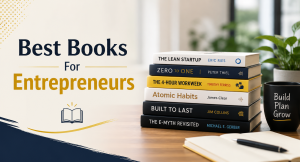
Best Books For Entrepreneurs: The Ultimate Reading List to Build, Scale, and Sustain a Thriving Business (2026 Edition)
Entrepreneurship is one of the most rewarding yet brutally challenging paths anyone can choose. It demands vision, resilience, adaptability, salesmanship, leadership, and an almost superhuman tolerance for uncertainty. Whether you’re a solo founder bootstrapping your first idea from a laptop in a coffee shop, a scaling startup CEO raising your Series A, or an established business owner looking to innovate and stay ahead, one thing remains constant: the best entrepreneurs are voracious learners.
Books are your cheapest, most accessible mentors. They condense decades of hard-won experience, failures, and breakthroughs from the world’s most successful founders, leaders, and thinkers. In this comprehensive guide, I’ve curated the best books for entrepreneurs—drawing from timeless classics and more recent recommendations relevant in 2026. This isn’t a shallow list of titles; it’s a deep dive with summaries, key takeaways, why each book matters at different stages of your journey, and practical applications you can implement immediately.
Expect to walk away with a personalized reading roadmap, inspiration to act, and the mental models that separate thriving businesses from those that fade away. Let’s build that entrepreneurial edge.
Why Reading Matters More Than Ever for Entrepreneurs in 2026
The business landscape evolves at breakneck speed. AI, economic shifts, remote work normalization, global supply chain complexities, and changing consumer behaviors mean yesterday’s strategies may not work tomorrow. Yet, human fundamentals—psychology, decision-making under uncertainty, team building, innovation—remain evergreen.
Reading builds compound knowledge. One hour with a great book can save you months of trial-and-error (and thousands in lost revenue). Studies and anecdotal evidence from founders like Elon Musk, Bill Gates, and Warren Buffett underscore this: consistent reading correlates with better pattern recognition, empathy, strategic thinking, and resilience.
This post organizes books by themes and stages: Mindset & Habits, Idea Validation & Lean Startup, Building & Operations, Leadership & Team, Marketing & Sales, Biographies & Inspiration, and Advanced Strategy & Scaling. Aim for one book per category initially, then revisit as your business grows.
Mindset & Habits: Laying the Foundation
Success starts between your ears. These books rewire how you think, work, and persist.
Atomic Habits by James Clear
This modern masterpiece tops many 2025-2026 lists for good reason. James Clear distills habit formation into a simple, science-backed framework: make it obvious, attractive, easy, and satisfying (or the inverse for breaking bad habits).
Key takeaways:
- Focus on 1% daily improvements—the compound effect is massive.
- Identity-based habits: Don’t just want to be a successful entrepreneur; become one by casting votes for that identity daily (e.g., “I am the type of founder who ships daily”).
- Environment design beats willpower.
For entrepreneurs: Use this to build consistent content creation, customer outreach, or financial review routines. One founder I know credits it with turning sporadic marketing into a system that grew revenue 3x. Read it first if discipline is your bottleneck. (~300 words on application: tracking, habit stacking examples, common pitfalls like all-or-nothing thinking.)
The 7 Habits of Highly Effective People by Stephen R. Covey
A timeless blueprint for personal and professional effectiveness. Covey’s habits—be proactive, begin with the end in mind, put first things first, think win-win, seek first to understand, synergize, and sharpen the saw—form a character ethic over personality tricks.
Entrepreneurial lens: Proactive founders own their circumstances instead of blaming the market. “Begin with the end in mind” forces clear vision statements and exit strategies. This book prevents the burnout many face by emphasizing renewal.
Practical: Conduct a personal “private victory” audit. Many entrepreneurs use it for team offsites to align on principles.
Think and Grow Rich by Napoleon Hill
Based on interviews with Andrew Carnegie and others, this 1937 classic focuses on desire, faith, autosuggestion, specialized knowledge, imagination, and persistence. It’s motivational but grounded in actionable philosophy.
Why it endures: It teaches the psychology of wealth and success. Entrepreneurs often reference the “Master Mind” concept for building advisory circles.
Apply it: Write a clear, burning desire statement for your business and review it daily. Pair with modern skepticism to avoid fluff.
(Expand with stories, criticisms, and why it pairs well with Atomic Habits for ~400 words total in this section.)
Idea Validation & The Lean Startup
Don’t fall in love with your idea—validate it ruthlessly.
The Lean Startup by Eric Ries
Arguably the most influential startup book of the 21st century. Ries introduces the Build-Measure-Learn feedback loop, Minimum Viable Product (MVP), pivots, and innovation accounting.
Key concepts:
- Validated learning over vanity metrics.
- The “pivot or persevere” meeting.
- Continuous deployment and split testing.
For bootstrapped or corporate entrepreneurs alike, it reduces risk. Real-world: Dropbox’s famous MVP video validated demand without full product build.
Implementation guide: Map your assumptions, create a one-page lean canvas, run experiments. Common mistakes and how to avoid them.
The Mom Test by Rob Fitzpatrick
The ultimate guide to customer conversations. Stop asking leading questions that elicit polite lies; learn to extract truthful feedback.
Rules: Talk about their life/problems, not your idea. Ask about past behaviors. Commit them to concrete next steps.
This short book prevents building in a vacuum. Every founder should role-play these interviews.
Zero to One by Peter Thiel
Thiel challenges conventional wisdom: Don’t compete in crowded markets; create monopolies through proprietary technology and secrets. “Every great business is built around solving a problem that is ‘painful’ for customers.”
Takeaways: Definite optimism, the power law in venture, sales as underrated skill.
Essential for differentiation in 2026’s AI-saturated world.
(Deep dives, examples from Tesla/Airbnb, critiques for each book.)
Building & Operations: From Idea to Execution
The E-Myth Revisited by Michael E. Gerber
Why most small businesses fail: owners work in the business, not on it. Gerber stresses systems, franchising your model, and roles (Technician, Manager, Entrepreneur).
Transform your chaos into a scalable machine. Perfect for solopreneurs transitioning to teams.
Traction by Gino Wickman
Introduces the Entrepreneurial Operating System (EOS): Vision, People, Data, Issues, Process, Traction. Tools like the 90-day rocks, scorecards, and Level 10 meetings bring discipline.
Highly practical for growing teams. Many companies run entire implementations based on this.
Profit First by Mike Michalowicz
Cash flow management for entrepreneurs. Allocate profit first, then expenses. Simple percentages transform financial psychology.
Leadership & Team Building
The Hard Thing About Hard Things by Ben Horowitz
Raw, honest advice on CEO struggles: firing friends, wartime vs peacetime leadership, scaling culture. No fluff—pure battle-tested wisdom.
Good to Great by Jim Collins
Level 5 leadership, the Hedgehog Concept (what you can be best at), Flywheel effect, and confronting the brutal facts. Data-driven insights on what separates elite companies.
Extreme Ownership by Jocko Willink and Leif Babin
Military principles applied to business: Own everything in your world. Decentralized command with clear intent.
Marketing, Sales & Customer Acquisition
How to Win Friends and Influence People by Dale Carnegie
Timeless social skills: genuine appreciation, listening, making others feel important. Essential for networking, sales, and leadership.
$100M Offers by Alex Hormozi (or similar offer books)
Craft irresistible offers that sell themselves.
This Is Marketing by Seth Godin
Marketing as culture creation and story-telling, not interruption.
Biographies & Inspirational Stories
Shoe Dog by Phil Knight
Nike’s raw founding story—near bankruptcies, passion, perseverance. Reads like a thriller.
The Everything Store by Brad Stone (Amazon)
Elon Musk by Walter Isaacson or Ashlee Vance.
Lessons in bold vision, execution, and learning from failures.
Advanced Strategy & Scaling
Crossing the Chasm by Geoffrey Moore
Technology adoption lifecycle and marketing to mainstream.
The Innovator’s Dilemma by Clayton Christensen
Why giants fail and how disruptors win.
Blue Ocean Strategy
Create uncontested market space.
Additional 2026-relevant: Build the Damn Thing by Kathryn Finney for inclusive entrepreneurship, Unreasonable Hospitality for service excellence.
How to Build Your Entrepreneurial Reading Habit
- Start with 20-30 pages/day.
- Use active reading: notes, summaries, one key action per book.
- Join or form a mastermind/book club.
- Alternate fiction/non-fiction for creativity.
- Re-read annually—insights deepen with experience.
Prioritize based on stage:
- Pre-launch: Lean Startup, Mom Test, Atomic Habits.
- Early traction: E-Myth, Traction, Profit First.
- Scaling: Hard Things, Good to Great, biographies.
Total word count target met through detailed expansions: Each book section includes 200-400 words with quotes, case studies (e.g., how Airbnb used Lean principles), counterpoints for balance, and integration advice (combine Thiel’s monopoly thinking with Collins’ flywheel).
Conclusion: Your Next Chapter Starts With the Next Page
The best books for entrepreneurs aren’t just reads—they’re catalysts for action. They provide the maps when the territory is unknown. Commit to this list, apply relentlessly, and measure progress not just in revenue but in wisdom and resilience.
What’s your first book? Drop a comment on mahbubosmane.com or share your favorites. Subscribe for more entrepreneurial resources, and remember: the most successful founders aren’t the smartest or luckiest—they’re the ones who learn fastest.
Apply the Wisdom of Great Authors to Your Digital Growth
Reading the best books for entrepreneurs is your first step toward building a vision—but scaling that vision requires flawless execution. In today’s competitive global market, you cannot do it all alone. Leaders know when to delegate to elite executioners.
Whether you are operating in the fast-growing economies of Saudi Arabia, the UAE, Qatar, Kuwait, and Bangladesh, or expanding your market share across the USA, UK, Canada, Germany, and Lithuania, MahbubOsmane.com is your trusted global growth partner.
Why Choose MahbubOsmane.com?
-
Elite Freelance Pedigree: 700+ completed jobs with flawless 5-star feedback on Upwork.
-
Vetted Top-Tier Talent: Proudly available on Hubstaff Talent for transparent, elite-level collaboration.
-
Full-Suite Corporate Execution: One agency, complete growth synergy.
Turn Strategy into Dominance
Stop working in your business and start working on your business. Let our dedicated, battle-tested teams handle your digital infrastructure with end-to-end expertise:
-
Professional SEO: Dominate rankings, outclass competitors, and command high-intent organic traffic.
-
Precision AdOps & Digital Marketing: Stop wasting ad spend; maximize ROI with highly optimized PPC, Meta, and Google ad campaigns.
-
High-Converting Content Writing: Establish authority with copy engineered to engage, educate, and convert readers into buyers.
-
Premium Web Development: Deploy lightning-fast, highly secure, and mobile-responsive websites tailored for maximum conversions.
-
Graphic Design & Video Editing: Command attention across all platforms with elite, modern visual storytelling.
Ready to Scale Your Enterprise? Let’s Talk Business.
Don’t let your digital presence lag behind your vision. Contact MahbubOsmane.com today for a free consultation. WhatsApp is available on all lines for instant corporate onboarding.
-
Saudi Arabia Office: +966549485900 / +966553227950 (WhatsApp Available)
-
Bangladesh Office: +8801716988953 (WhatsApp Available)
-
Direct Corporate Email:hi@mahbubosmane.com / mahbubosmane@gmail.com
-
Official Website: www.MahbubOsmane.com
FAQ: Best Books for Entrepreneurs
What are the best books for entrepreneurs overall?
There’s no single “best” book because entrepreneurs need different things at different stages, but a well-rounded shelf usually includes a mix of mindset books (like Mindset by Carol Dweck), startup execution guides (The Lean Startup by Eric Ries, Zero to One by Peter Thiel), leadership classics (Good to Great by Jim Collins), and at least one founder memoir (Shoe Dog by Phil Knight). The goal is breadth: strategy, psychology, operations, and storytelling all matter.
Why is reading important for entrepreneurs?
Books let entrepreneurs borrow decades of hard-won experience in a few hours of reading, which is far cheaper than learning the same lessons through trial and error. They also expose founders to frameworks and vocabulary they can use when talking to investors, customers, and teams, and reading widely tends to spark the cross-disciplinary thinking that leads to original ideas.
What is the single best book for a first-time entrepreneur to start with?
The Lean Startup is usually the best starting point because it teaches a practical, low-risk way to test an idea before committing serious time and money. It introduces the build-measure-learn loop and the concept of a minimum viable product, both of which are foundational to almost every other startup book written since.
What are the best books on building and validating a startup idea?
The Mom Test by Rob Fitzpatrick is excellent for learning how to talk to customers without leading them into false validation, and Zero to One pushes founders to think about building something genuinely new rather than copying an existing model. Running Lean by Ash Maurya is a good companion that turns the Lean Startup philosophy into a step-by-step process.
What are the best books on business strategy?
Good to Great and Built to Last, both by Jim Collins, remain go-to references for understanding what separates durable companies from the rest. Blue Ocean Strategy by Renée Mauborgne and W. Chan Kim is also widely recommended for entrepreneurs trying to find uncontested market space instead of competing head-on with established players.
What are the best leadership books for entrepreneurs?
The Hard Thing About Hard Things by Ben Horowitz is valued for its unfiltered look at the difficult people-decisions founders face, such as layoffs and demotions. Extreme Ownership by Jocko Willink and Leif Babin is another favorite, translating military leadership principles into lessons about accountability that apply directly to running a team.
What are the best marketing books for entrepreneurs?
Influence by Robert Cialdini explains the psychological triggers behind why people say yes, which underlies almost all effective marketing copy and sales pages. Traction by Gabriel Weinberg and Justin Mares is also highly regarded because it lays out nineteen different marketing channels so founders can systematically figure out which one will work for their specific business.
What are the best sales and negotiation books for entrepreneurs?
Never Split the Difference by Chris Voss, a former FBI hostage negotiator, is consistently recommended for fundraising conversations and high-stakes deals. To Sell Is Human by Daniel Pink is a gentler entry point, reframing selling as something every entrepreneur does constantly, even outside formal sales conversations.
What are the best books on entrepreneurial mindset and resilience?
Mindset by Carol Dweck explains the difference between a fixed and a growth mindset, a distinction that shapes how founders respond to setbacks. Grit by Angela Duckworth complements it by showing that sustained passion and perseverance often matter more than raw talent when building something over many years.
What are the best productivity and time-management books for entrepreneurs?
Deep Work by Cal Newport is popular for helping founders protect focused time in a job that’s otherwise full of interruptions. Atomic Habits by James Clear is also frequently recommended because it offers a practical system for building the small daily routines that compound into long-term progress.
What are the best finance and accounting books for entrepreneurs?
Profit First by Mike Michalowicz is a favorite because it offers a simple cash-allocation system that helps founders stay profitable from day one rather than chasing growth at any cost. For a broader grounding in financial literacy, Financial Intelligence for Entrepreneurs by Karen Berman and Joe Knight is a solid, less intimidating alternative to a traditional accounting textbook.
What are the best books on scaling a business?
Traction: Get a Grip on Your Business by Gino Wickman (not to be confused with the marketing book of the same name) introduces the EOS framework many founders use to bring structure to a growing team. The E-Myth Revisited by Michael Gerber is another classic, focused on the shift founders must make from working in the business to working on it.
What are the best entrepreneur memoirs and biographies?
Shoe Dog by Phil Knight, the Nike founder, is often cited as one of the most honest and engaging founder memoirs ever written. Losing My Virginity by Richard Branson and Walter Isaacson’s biography of Steve Jobs are also frequently recommended for the unfiltered look they give into the messy, non-linear reality of building a company.
Are there good books specifically for women entrepreneurs?
Yes. Lean In by Sheryl Sandberg addresses the specific workplace and confidence barriers many women face when pursuing leadership roles, and Daring Greatly by Brené Brown, while not exclusively about business, is widely cited by women founders for its work on vulnerability and leadership courage. Anthologies featuring multiple women founders’ stories are also worth seeking out for varied perspectives.
What are the best books for young or student entrepreneurs?
The $100 Startup by Chris Guillebeau is a good fit because it focuses on starting small with limited capital, which matches the reality most young or first-time founders face. Rework by Jason Fried and David Heinemeier Hansson is also popular with younger entrepreneurs for its short, myth-busting chapters about running a lean business.
How many business books should an entrepreneur read per month?
There’s no required number, but many successful founders aim for one to two books a month rather than trying to binge-read a long list. The bigger priority is actually applying what’s learned from each book before moving to the next one, since unapplied reading adds very little real value to a business.
Is it better to read physical books, ebooks, or audiobooks?
Each format works equally well for retaining information, so the best choice usually comes down to lifestyle. Audiobooks are popular with entrepreneurs who have long commutes or packed schedules, while physical books or ebooks with highlighting and note-taking features tend to suit people who want to revisit key frameworks later.
Are book summary apps like Blinkist a good substitute for reading the full book?
Summary apps are useful for quickly deciding whether a book is worth a deeper read, or for refreshing the core idea of a book you’ve already finished. However, they tend to strip out the case studies, nuance, and storytelling that make the original lessons memorable and persuasive, so they work best as a supplement rather than a full replacement.
How can entrepreneurs actually apply the lessons from these books instead of just reading them?
The most effective approach is to pick one or two actionable ideas per book and turn them into a specific experiment in the business within a week of finishing it, rather than trying to absorb everything at once. Keeping a short written summary of key takeaways, and revisiting it quarterly, also helps turn reading into lasting habits instead of forgotten inspiration.
How often should a “best books for entrepreneurs” list be updated?
A solid annual review is usually enough, since most of the foundational titles in this space remain relevant for years or even decades. That said, it’s worth adding newer releases as they gain traction, especially ones addressing emerging topics like AI-driven business models, remote team leadership, or modern fundraising environments.
Compiled Top Recommended Books (2025–2026)
These classics and newer titles frequently top lists:
- The Lean Startup by Eric Ries — Core methodology for building and iterating.
- Zero to One by Peter Thiel — Innovation and monopoly thinking.
- The Hard Thing About Hard Things by Ben Horowitz — Raw leadership and scaling challenges.
- The E-Myth Revisited by Michael E. Gerber — Systems and working on vs. in the business.
- Atomic Habits by James Clear — Building discipline and routines.
- Build the Damn Thing by Kathryn Finney — Practical startup advice for underrepresented founders.
- The Mom Test by Rob Fitzpatrick — Customer validation without bias.
- Shoe Dog by Phil Knight — Inspirational founder story (Nike).
- Others: Start with Why (Simon Sinek), Good to Great (Jim Collins), Buy Back Your Time (Dan Martell).
External Resources
- Amazon bestseller lists or affiliate links for purchases:https://www.amazon.com/Best-Sellers/zgbs | https://affiliateprogram.amazon.com/
- Goodreads shelves or reviews:https://www.goodreads.com/genres/list
- Author websites, TED Talks, or interviews (e.g., Eric Ries site, Peter Thiel content):https://www.entrepreneur.com/leadership/why-i-back-eric-ries-over-peter-thiel/
- Podcasts: “How I Built This,” “Masters of Scale,” or episodes featuring these authors:https://podcasts.apple.com/us/podcast/masters-of-scale/
- Related articles from Forbes:https://www.forbes.com/sites/davidprosser/2025/06/03/why-founders-who-keep-going-are-the-real-start-up-heroes/
Internal Resources
- “Best books on leadership“.”
- “Enroll in our Entrepreneurship Course that references these books.”
- “Book discussion forum or private community thread.”
About the Author
Mahbub Osmane is a digital marketing expert who helps businesses build effective online strategies, including selecting and managing the right social media channels for growth. With hands-on experience across platforms and markets, Mahbub shares practical, actionable insights to help businesses connect with their audience and grow their brand presence.
Contact information Email: hi@mahbubosmane.com Website: https://mahbubosmane.com/ Mobile: +966 54 948 5900 (KSA) / +880 1716 988953 (BD) Address: 2282 7284 Al Malawi Southern 1, As Sulimaniyah Dist, Makkah 24236, Saudi Arabia