
Boosting Website Traffic with Topic Clusters: The Ultimate Guide
Table of Contents
-
Introduction
-
What Are Topic Clusters?
-
Why Topic Clusters Are Crucial for SEO
-
How Topic Clusters Work: The Pillar-Cluster Model Explained
-
The Key Benefits of Topic Clusters for SEO
-
How to Create Effective Topic Clusters
-
Step 1: Identify Core Topics
-
Step 2: Conduct Comprehensive Keyword Research
-
Step 3: Create and Optimize Pillar Content
-
Step 4: Build Cluster Pages That Provide Value
-
Step 5: Interlink Pillar and Cluster Content
-
Step 6: Continuously Optimize for SEO
-
-
Best Practices for Building a Topic Cluster Strategy
-
Advanced Strategies: Leveraging Topic Clusters for Competitive Advantage
-
How to Measure the Success of Your Topic Cluster Strategy
-
Common Pitfalls to Avoid in Topic Cluster Implementation
-
The Future of SEO and Topic Clusters
-
Conclusion
-
Frequently Asked Questions (FAQs)
Introduction
The modern SEO landscape is rapidly evolving. Gone are the days when simple keyword-targeted content could carry your website to the top of the rankings. Google’s algorithms now prioritize the depth of your content and its relevance to user search intent. This shift in search engine ranking factors has made Topic Clusters an essential strategy for websites seeking to improve their SEO and boost organic traffic.
But what exactly are topic clusters, and how can they help you improve your website’s SEO? In this guide, we will walk you through everything you need to know about topic clusters—what they are, why they are important, how to build an effective topic cluster strategy, and how they can boost your website traffic.
What Are Topic Clusters?
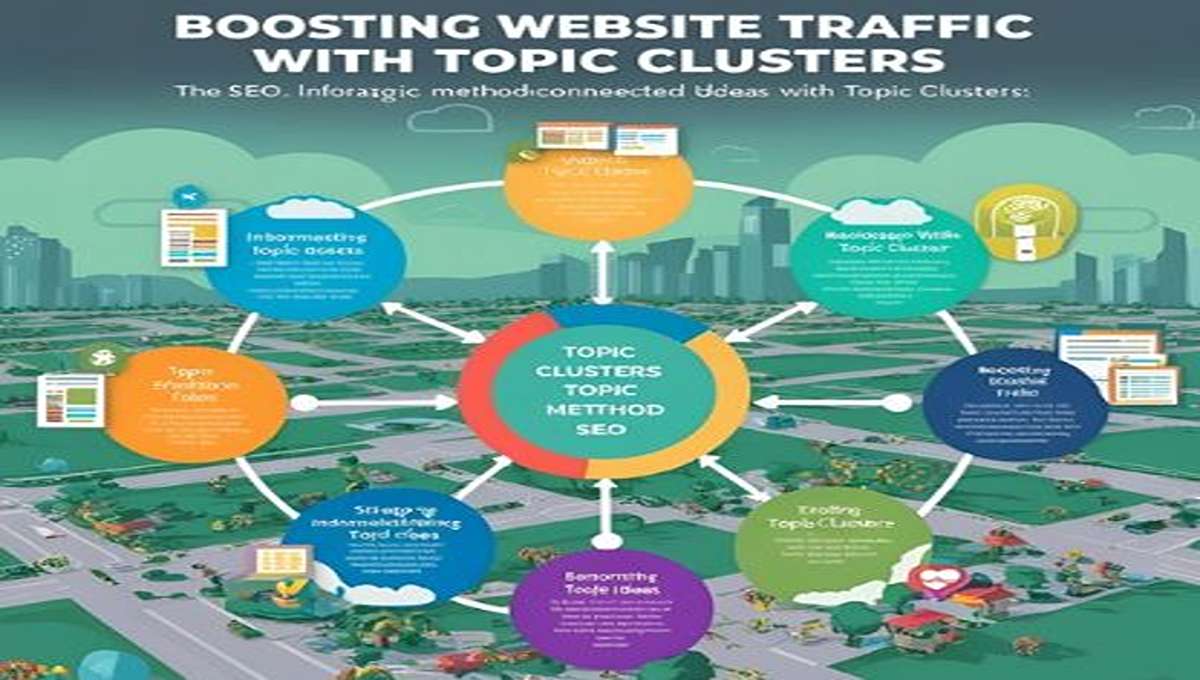
Topic clusters are an SEO content organization strategy that revolves around grouping related content around a pillar page. The pillar page serves as a comprehensive, authoritative source of information on a broad topic, while cluster pages are more focused, in-depth articles that dive deeper into subtopics related to the pillar page. These cluster pages are linked to the pillar page and each other to create a well-organized internal linking structure.
To visualize this, imagine a large umbrella (the pillar page) with smaller, tightly connected spokes (the cluster pages) radiating from it. The pillar page is a comprehensive guide that provides an overview, while the cluster pages focus on specific areas of the main topic, providing more detailed answers to users’ queries.
For example, a digital marketing agency might have a pillar page titled “The Ultimate Guide to SEO”, with cluster pages covering specific SEO techniques like “On-Page SEO,” “Off-Page SEO,” “Technical SEO,” “SEO Tools,” and “SEO for Ecommerce.”
Why Topic Clusters Are Crucial for SEO
SEO has changed significantly over the last few years. Google now aims to provide users with the best possible results based on their search intent. To achieve this, it increasingly values content that is well-structured and covers a topic comprehensively. Topic clusters align with this approach by organizing content in a way that Google understands and favors. Here’s why topic clusters are critical for modern SEO:
-
Improved Search Engine Rankings: Topic clusters provide a clear structure that helps Google understand the relationships between your content, improving your chances of ranking higher for multiple keywords related to a broad topic.
-
Enhanced Relevance and Context: By linking related content together, topic clusters give Google an idea of the full context of your website’s content, making it easier for your site to rank for a variety of related keywords.
-
Better Internal Linking: The pillar-cluster model creates an organized internal linking structure, helping distribute link equity across your website, leading to higher rankings for your pages.
-
Boosted Organic Traffic: With comprehensive content that covers topics from different angles, topic clusters are more likely to rank for long-tail keywords, driving more organic traffic to your site.
-
Topical Authority: Building topic clusters positions your website as an authority on specific subjects, which can further improve rankings and trustworthiness.
How Topic Clusters Work: The Pillar-Cluster Model Explained
To implement a successful topic cluster strategy, you need to understand the pillar-cluster model. This model revolves around creating a single, comprehensive pillar page and then linking that page to several cluster pages. Here’s how it works:
Pillar Page
-
The pillar page is a comprehensive, long-form piece of content (usually 2000+ words) that covers a broad topic in general terms. It should aim to answer the main question a user might have regarding the topic.
-
This page serves as the main authority on the subject and is designed to give a comprehensive overview. It should be well-organized, with sections that link to deeper, more specific articles (the cluster pages).
Cluster Pages
-
Cluster pages are individual articles that dive deep into specific subtopics related to the main pillar topic. These pages should provide detailed, high-quality information, targeting long-tail keywords that fall under the broader umbrella topic.
-
Each cluster page should link back to the pillar page and to other relevant cluster pages, creating a network of content.
Internal Linking Structure
-
Each cluster page should contain a link to the pillar page and vice versa. This linking structure helps establish the connection between the content pieces and shows search engines that the content is part of a larger topic.
-
Interlinking between the cluster pages can further improve your site’s SEO by providing more context to search engines.
Is your website struggling with crawl errors? Contact our SEO experts to ensure your site is error-free and optimized for search engines.
WhatsApp: 966549485900
Direct Call: 447380127019
Email: hi@MahbubOsmane.com
Professional SEO Services: Explore Our Services
The Key Benefits of Topic Clusters for SEO
Adopting a topic cluster strategy has numerous SEO benefits, including:
-
Improved Rankings for Multiple Keywords: By covering a broad topic through pillar content and more specific subtopics through cluster pages, you increase your chances of ranking for a wide range of keywords.
-
Higher Organic Traffic: Topic clusters help target long-tail keywords, which attract highly specific search queries and can drive more qualified organic traffic to your site.
-
Improved Indexing by Google: With proper internal linking and a clear structure, Google can crawl and index your pages more efficiently, which improves the chances of your content ranking.
-
Increased Time on Site and Reduced Bounce Rates: By providing users with a well-organized, in-depth content experience, they are more likely to engage with your site longer, reducing bounce rates.
-
Establishing Topical Authority: When you cover a topic comprehensively, you become an authority in your niche, which can help you rank higher over time.
How to Create Effective Topic Clusters
Creating a successful topic cluster strategy requires careful planning. Here are the steps involved:
Step 1: Identify Core Topics
Start by identifying the main topics that align with your business goals and target audience. These topics should be broad enough to cover multiple related subtopics. For instance, a law firm could use “Personal Injury Law” as a core topic, with subtopics like “Car Accident Lawsuits,” “Slip and Fall Claims,” and “Workers’ Compensation Claims.”
Step 2: Conduct Comprehensive Keyword Research
Keyword research is critical in understanding what your audience is searching for. Use tools like Google Keyword Planner, Ahrefs, or SEMrush to discover relevant keywords for both pillar and cluster content. Focus on finding keywords with significant search volume, user intent, and relevance to your core topics.
Step 3: Create and Optimize Pillar Content
Once you’ve identified your core topics, create your pillar page. This content should be a comprehensive resource on the subject, addressing the most common questions and concerns. Be sure to optimize your pillar page with target keywords, internal links to cluster pages, and external authoritative sources when necessary.
Step 4: Build Cluster Pages That Provide Value
Next, create cluster pages that provide detailed, helpful information about each subtopic. Cluster pages should target long-tail keywords and provide valuable answers to users’ questions. These pages should be highly focused, concise, and optimized for the keywords you’ve identified.
Step 5: Interlink Pillar and Cluster Content
Ensure that each cluster page links back to the pillar page and includes links to other relevant cluster pages. The interlinking structure is crucial for SEO, as it helps distribute link equity across your site and tells search engines how your content is related.
Step 6: Continuously Optimize for SEO
Topic clusters should be regularly updated to remain relevant. Add new content, refresh outdated information, and ensure all links (internal and external) are working. This will keep your content fresh and maintain its relevance for both users and search engines.
Best Practices for Building a Topic Cluster Strategy
To ensure the success of your topic cluster strategy, follow these best practices:
-
Consistency: Regularly create new cluster content and ensure that your pillar pages are up-to-date.
-
Quality Over Quantity: Focus on creating in-depth, high-quality content rather than just adding more pages.
-
Use Rich Media: Enhance your content with images, infographics, and videos to improve user engagement.
-
Monitor Performance: Regularly analyze the performance of your topic clusters using Google Analytics and SEO tools to see what’s working and what needs improvement.
Advanced Strategies: Leveraging Topic Clusters for Competitive Advantage
-
Competitor Research: Analyze competitor websites to identify gaps in their topic clusters. Create content that fills those gaps to attract more traffic.
-
Use Topic Clusters for Link Building: By establishing topical authority, you can increase your chances of earning backlinks from authoritative sources.
-
Leverage User-Generated Content: Allowing users to contribute to your cluster pages can add fresh perspectives, increasing engagement and enriching the content.
How to Measure the Success of Your Topic Cluster Strategy
To gauge the success of your topic cluster strategy, track the following metrics:
-
Organic Traffic Growth
-
Keyword Rankings
-
Engagement Metrics (time on page, bounce rate, etc.)
-
Click-Through Rate (CTR)
-
Conversion Rates
Common Pitfalls to Avoid in Topic Cluster Implementation
-
Overcomplicating the Structure: Keep the pillar-cluster structure simple and easy to navigate.
-
Neglecting Quality for Quantity: Don’t create pages just to fill space. Every cluster page should offer real value.
-
Failing to Update Content Regularly: Keep your content fresh by updating it frequently to stay relevant.
The Future of SEO and Topic Clusters
As search engines evolve, topic clusters will continue to be a critical strategy for SEO. With Google’s increasing focus on semantic search and user intent, organizing your content into clusters will help ensure your website remains relevant and authoritative in your niche.
Conclusion
Implementing a topic cluster strategy is a game-changer for modern SEO. By organizing your content around comprehensive pillar pages supported by detailed cluster pages, you create a structured ecosystem that search engines and users can easily navigate. This approach not only boosts your authority on key topics but also helps your website rank for a wide range of relevant keywords, driving consistent organic traffic.
The benefits of topic clusters go beyond rankings—they enhance user experience by providing a logical flow of information, reduce bounce rates, and increase engagement. As search engines continue to evolve, prioritizing intent-based search results, topic clusters will become even more valuable. This strategy enables you to demonstrate expertise, authority, and trustworthiness (E-A-T), which are critical for SEO success in today’s digital landscape.
However, successful topic clustering requires a well-planned approach—thorough keyword research, content creation, interlinking, and ongoing optimization. Avoid common pitfalls, such as creating shallow content or neglecting updates, and instead, focus on delivering real value to your readers.
By embracing topic clusters, you position your website as a go-to resource in your industry, ultimately driving more traffic, leads, and conversions. Start leveraging topic clusters today to future-proof your SEO strategy and achieve long-lasting results.
Is your website struggling with crawl errors? Contact our SEO experts to ensure your site is error-free and optimized for search engines.
WhatsApp: 966549485900
Direct Call: 447380127019
Email: hi@MahbubOsmane.com
Professional SEO Services: Explore Our Services
#SEO #TopicClusters #ContentMarketing #WebsiteTraffic #SEOstrategy
Do you still have questions? Or would you like us to give you a call?
Just fill out the contact form or call us at wa.me/+966549485900 or wa.me/+8801716988953 to get a free consultancy from our expert or you can directly email us at hi@dev.mahbubosmane.com We would be happy to answer you.
MahbubOsmane.com’s Exclusive Services