
The Definitive Guide to Modern Link Building: How to Earn High-Authority Backlinks That Drive Organic Growth
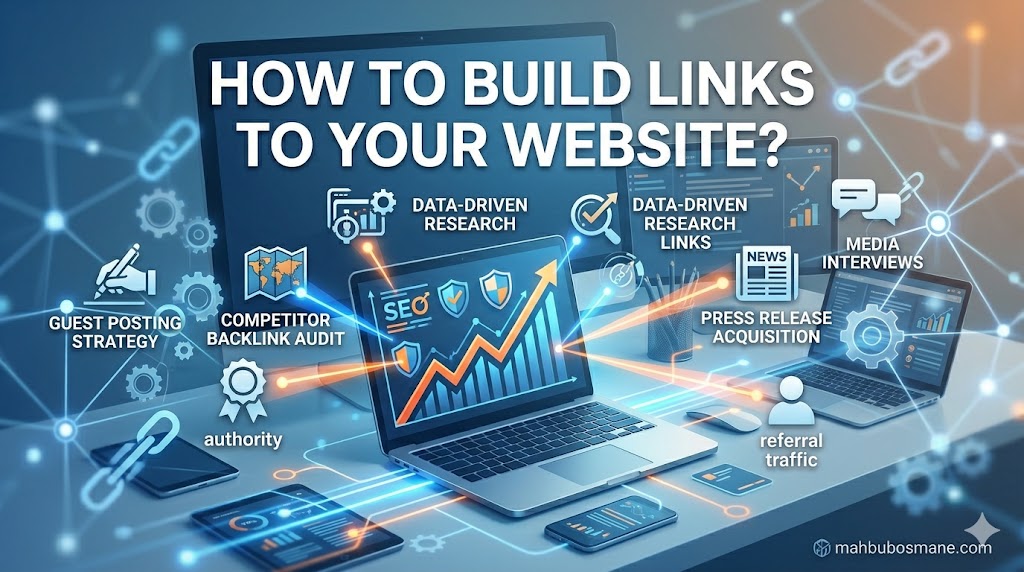
How To Build Links To Your Website?
In the world of Search Engine Optimization (SEO), if content is the engine of your website, backlinks are the fuel. You can build the most visually stunning, technically flawless website on the internet, but without high-quality links pointing to it, your pages are likely to languish in the dark corners of search engine results pages (SERPs).
Link building remains one of the most critical, yet misunderstood, pillars of organic search success. Search engines like Google look at links as votes of confidence. When one website links to another, it is essentially saying to search engines: “This content is valuable, trustworthy, and authoritative.”
However, the days of mass-submitting your site to low-quality web directories or buying thousands of spammy forum links for fifty dollars are long gone. Today, execution requires a sophisticated mix of data analysis, exceptional content creation, psychological outreach framing, and continuous relationship building.
This comprehensive guide breaks down exactly how to build a powerful backlink profile from scratch, scale your outreach efforts, and navigate the complex, ever-evolving landscape of modern SEO.
Deconstructing the Anatomy of a High-Quality Backlink
Before diving into execution tactics, it is crucial to understand that not all links are created equal. A single link from a globally recognized media publication or an industry-leading resource can carry more ranking power—often referred to as “link juice”—than hundreds of links from obscure, low-authority blogs.
When search engine algorithms crawl a backlink, they evaluate several distinct structural elements to determine its true value.
Domain Authority and Page Authority
While metrics like Domain Rating (DR) or Domain Authority (DA) are third-party metrics created by software providers (like Ahrefs, Semrush, or Moz) rather than Google itself, they act as reliable proxies for a site’s overall strength. A high-quality link originates from a website that already has an established, clean reputation and a strong link profile of its own.
Topical Relevance
Google places immense weight on contextual alignment. If your website focuses on technology or digital marketing, a backlink from a highly respected tech publication makes perfect sense. If you suddenly receive a link from a localized cooking blog, the search algorithm may view it with suspicion, or at best, neutralize its impact. The context of the linking site must match or complement your niche.
Link Placement and Context
Where a link lives on a page matters immensely. Google uses sophisticated layout algorithms to determine the visibility and editorial intent of a hyperlink:
-
Editorial Contextual Links: Links embedded naturally within the body text of a comprehensive article carry the absolute highest value. They signal true editorial endorsement.
-
Footer and Sidebar Links: Links placed in global navigation menus, sidebars, or footers are frequently discounted or viewed as promotional, paid ads, or template footprints.
Anchor Text Optimization
Anchor text is the clickable, visible text inside a hyperlink. It passes vital contextual clues to search engine bots about the topic of the destination page.
<a href="https://yourwebsite.com/seo-guide">advanced SEO strategies</a>
In this code snippet, “advanced SEO strategies” serves as the anchor text. To maintain a natural, penalty-safe link profile, your overall anchor text distribution should feature a balanced blend of branded terms, exact match keywords, partial match variations, and generic phrases (like “click here” or “source”). Over-optimizing exact match anchor text across hundreds of links is a massive red flag that can trigger algorithmic filters.
DoFollow vs. NoFollow Link Attributes
Not all links pass authority. Webmasters use HTML attributes to communicate their relationship with the linked page to search crawlers:
-
DoFollow: The standard hyperlink structure. It signals to search engine crawlers to follow the link and pass ranking signals.
-
NoFollow (
rel="nofollow"): Tells search engine bots not to pass authority or endorse the destination page. Common on user-generated content, forums, and blog comments. -
Sponsored (
rel="sponsored"): Used specifically for paid links, advertisements, or affiliate arrangements. -
UGC (
rel="ugc"): Designed for User Generated Content like forum posts or comments.
While NoFollow and UGC links do not directly transfer traditional link equity, they remain vital for building a diverse, natural-looking link profile and driving referral traffic.
Pre-Requisites: Building an “Incentive Structure” Before Outreach
The most common point of failure in link building is reaching out to webmasters when your site has nothing of exceptional value to offer. Link building is, at its core, a value exchange. You are asking someone to modify their digital property to feature your brand. Why should they?
To earn links naturally, you must create content assets that act as Link Bait—content so uniquely useful, thorough, or entertaining that content creators naturally want to cite it.
The Content Blueprints That Attract Authority
1. Data-Driven Research Studies and Proprietary Surveys
Original data is the gold standard of link-attracting content. Writers and journalists constantly look for statistics to validate their claims. If you conduct an industry survey, analyze public data sets to uncover fresh insights, or publish a comprehensive case study, other content creators will link directly to your asset as their primary source.
2. Comprehensive, Long-Form Educational Hubs
Often referred to as “Ultimate Guides” or “Pillar Content,” these assets completely exhaust an industry topic. By creating a definitive resource that covers every facet of a specific subject, you build an asset that other bloggers will link to when they want to reference a concept without explaining it in full on their own page.
3. Visual Infographics and Data Visualizations
Complex concepts are often best processed visually. When you design an insightful, clean infographic that distills a highly technical process, other websites will embed your graphic on their blogs, providing an editorial attribution link directly back to your original page.
4. Free Tools, Calculators, and Interactive Templates
Interactive elements have incredibly high link-to-content conversion rates. Building a free industry calculator, a dynamic pricing model tool, or a downloadable checklist creates an evergreen utility that communities, forums, and resources pages will reference for years.
High-Conversion Link Building Strategies
Once your website is anchored by high-value content, you can begin deploying proactive acquisition campaigns. The following strategies represent the most dependable, white-hat frameworks used by growth agencies and digital marketers globally.
Strategy A: Competitor Backlink Replication (Reverse Engineering)
Your competitors have already laid out a roadmap for success. By analyzing where their links are coming from, you can uncover highly targeted opportunities within your exact niche.
The Step-by-Step Blueprint:
-
Identify 5 to 10 direct business competitors alongside top informational sites ranking for your target keywords.
-
Input these domains into an SEO analysis tool (such as Ahrefs, Semrush, or Moz).
-
Filter their backlink profiles to look specifically for “Editorial” or “Content-driven” DoFollow links.
-
Analyze why the competitor received the link. Was it a guest post? Were they cited for a statistic? Did they get featured on a local resource list?
-
Reach out to the same webmaster offering your updated, superior asset as an alternative or additional resource.
Strategy B: Digital PR and the Skyscraper Technique
Popularized by SEO pioneer Brian Dean, the Skyscraper Technique relies on a simple psychological premise: webmasters naturally prefer to link to the absolute best version of a resource.
[Find an Existing Popular Resource with Many Links]
                      │
                      ▼
[Create a Version That is Significantly More Comprehensive/Updated]
                      │
                      ▼
[Reach Out to Every Site Pointing to the Original Resource]
To execute this, you find a piece of content within your niche that has already acquired a high volume of links. You then build a page that completely eclipses it—making it longer, more up-to-date, cleaner in design, and backed by superior media elements. Finally, you reach out to everyone currently linking to the inferior version, showing them your new asset and suggesting an upgrade to their existing out-of-date link.
Strategy C: Broken Link Building
Broken link building is a highly effective, empathetic outreach strategy. Instead of asking for a favor out of nowhere, you help webmasters identify broken links (404 errors) on their own sites, improving their user experience while offering your relevant page as the ideal replacement.
| Phase | Core Objective | Key Tool/Action |
| 1. Discovery | Find resource or links pages in your niche. | Google Search Operators or SEO Crawlers |
| 2. Audit | Scan the page for dead or broken external links. | Check My Links (Extension) or Ahrefs |
| 3. Matching | Ensure you have an asset that perfectly matches the broken link. | Content adjustment/creation |
| 4. Outreach | Alert the webmaster politely and pitch your link as a drop-in fix. | Customized Email Outreach |
Strategy D: Guest Posting for Thought Leadership (The Quality First Approach)
While guest blogging has been abused by spammers over the years, publishing high-quality articles on authoritative, tightly relevant websites remains an excellent way to secure contextual backlinks and introduce your brand to established audiences.
When pitching guest content, ensure the site has actual human editorial standards, genuine traffic, and strict quality guidelines. Avoid “Guest Post Farms”—sites that exist solely to sell links and publish low-tier content across wildly unrelated topics.
Masterclass in Email Outreach: Crafting High-Response Templates
Even the best piece of content will fail to build links if your promotional emails look like generic, automated spam. Webmasters and journalists receive dozens of cold link requests every single day. To cut through the noise, your outreach strategy must prioritize personalization, clarity, and immediate mutual value.
Anatomy of a Perfect Cold Pitch
-
The Subject Line: Keep it concise, non-clickbaity, and highly specific to their content.
-
The Personalization Hook: Prove you actually read their work. Reference a specific point they made in their article or a recent business milestone they shared.
-
The Value Proposition: State exactly what value your link brings to their readers, not your business.
-
The Frictionless CTA: Keep your call-to-action low-pressure. Instead of asking them to swap a link immediately, ask if they would be open to taking a look at your asset first.
A High-Performance Broken Link Outreach Framework
Plaintext
Subject: Broken resource on [Website Name] / Quick fix?

Hi [Webmaster Name],

I was searching for some detailed insights on [Topic Niche] today and ran across your excellent resources page here: [Insert Page URL]. It’s an awesome collection—I actually pinned it to my references folder.

While going through the links, I noticed that one of your external resources on [Specific Broken Link Topic] seems to be dead. It’s currently throwing a 404 error and breaking the user experience for your readers.

I recently put together a deep-dive, fully updated guide on that exact topic, packed with current data and step-by-step frameworks: [Insert Your URL].

If you're planning on cleaning up that page anytime soon, it might make a seamless, drop-in replacement to keep your guide fully actionable for your community.

Either way, thanks for curating such an awesome resource page!

Best regards,

[Your Name]
[Your Title/Brand]
The Psychological Rules of Scaling Outreach
-
Never mass blast: Segment your outreach lists into hyper-specific buckets based on sub-niches.
-
Follow up precisely once: People are busy. A polite follow-up email 4 to 5 days after your initial pitch can lift response rates by over 40%, but sending three or four follow-ups borders on harassment.
-
Use a professional email handle: Always reach out from a branded custom domain email address rather than a generic Gmail address to establish professional credibility instantly.
Strategic Link Equity Management: Maximizing Internal Architecture
Link building isn’t just about looking outward; it’s also about optimizing what happens within your own digital walls. Internal link architecture determines how effectively link juice flows from your high-authority landing pages down into your deeper transactional or commercial service pages.
      [High-Authority Earned Backlink]
                     │
                     ▼
             [Pillar Blog Post]
             (Passes Link Equity)
                     │
          ┌──────────┴──────────┐
          ▼                     ▼
[Service/Product Page A]   [Service/Product Page B]
By connecting your link-heavy informational assets directly to your commercial content via highly descriptive contextual internal links, you spread ranking power across your entire domain, raising the keyword positions of pages that are naturally harder to build direct backlinks to.
Dangerous Traps: Black-Hat Pitfalls and the Google Penalty System
When building links, it is easy to become tempted by shortcuts. However, violating Google’s Webmaster Guidelines can result in severe algorithmic suppression or manual action penalties that can instantly wipe out your entire organic traffic profile.
Tactics to Avoid at All Costs:
-
Private Blog Networks (PBNs): Networks of expired domains set up by a single entity solely to link out to a core commercial site. Google’s AI models are incredibly adept at identifying these artificial hosting and footprint patterns.
-
Paid Links on Unvetted Marketplaces: Buying links directly from public forums, Fiverr, or shady link lists will inevitably poison your backlink profile.
-
Automated Link Injection Bots: Software programs designed to auto-submit low-grade articles or comments to thousands of unprotected sites across the web.
The Dynamic Link Building Strategy Planner
To map out your investment, execution timelines, and expected outcomes, utilize the modeling tool below to understand how outreach volume directly influences backlink acquisition and revenue growth.
Final Thoughts: The Compound Effect of Earned Links
Link building is not a one-time marketing campaign; it is a long-term, foundational business process. It requires consistency, patience, and a relentless focus on creating high-value content.
In the beginning, securing your first few dozen high-authority links can feel incredibly slow. But as your domain authority scales, your rankings climb. As your positions climb, your visibility increases, leading to more organic reference citations and links without active outreach. This is the compound interest engine of organic SEO. Focus on relationship building, provide undeniable value to webmasters, and your website will establish a clean, powerful authority profile that competitors cannot easily duplicate.
Ready to Turn Link Building into a Scalable Revenue Engine? Let the Experts Handle It.
Building high-authority backlinks, crafting link-worthy content, and navigating the complexities of modern SEO isn’t just time-consuming—it requires a dedicated team of digital specialists executing at the highest tier. If you are ready to stop chasing links and start scaling your organic traffic, MahbubOsmane.com is here to accelerate your growth.
Whether you are a scaling enterprise in the USA, UK, Canada, or Germany, a fast-growing brand in Saudi Arabia, the UAE, Qatar, or Kuwait, or an established business in Lithuania or Bangladesh, we deliver the localized insight and global technical expertise your business needs to dominate search engine results.
Why Global Brands Trust MahbubOsmane.com
We don’t just talk about digital growth; we have proven it across hundreds of industries. Our elite freelance track record speaks for itself:
-
700+ Completed Projects with flawless 5-Star Feedback on Upwork.
-
Fully vetted and actively available for enterprise-grade contract deployment via Hubstaff Talent.
-
A fully integrated, cross-functional team engineered to handle your entire digital ecosystem.
Our Full-Suite Digital Capabilities:
Beyond world-class Link Building and Professional SEO, we provide end-to-end digital engineering to help your business convert traffic into revenue:
-
AdOps & Performance Marketing: Data-driven paid campaigns optimized for maximum ROI.
-
Premium Content Writing: Copywriting, storytelling, and pillar assets designed to earn links naturally.
-
Website Development: Light-speed, responsive, and secure digital architecture built for search bots and users alike.
-
Graphic Design & Video Editing: High-conversion visuals, professional social media assets, and interactive media.
Let’s Scale Your Business Together
Don’t let your competitors capture the high-authority link equity that belongs to your brand. Reach out to our strategy team today for a comprehensive digital audit and a tailored growth roadmap.
Get in Touch Instantly (WhatsApp Available on All Lines):
-
🇸🇦 Saudi Arabia Office: +966 54 948 5900 / +966 55 322 7950
-
🇧🇩 Bangladesh Office: +880 1716 988953
Direct Email Correspondence:
Secure Your Digital Blueprint:
-
Visit: www.MahbubOsmane.com
Partner with a 5-Star Agency. Let us deploy the advanced SEO, technical web development, and digital marketing strategies your business needs to achieve sustained 20% to 40% revenue growth over the next quarter. Click below to message us directly on WhatsApp and secure your consultation today!
FAQ About How To Build Links To Your Website?
1. What is link building in SEO?
Link building is the strategic process of acquiring hyperlinks from other websites to your own. Search engines use these links as “votes of confidence” to determine the authority, trustworthiness, and relevance of a web page. A robust backlink profile directly influences how high your pages rank in organic search results.
2. Why are backlinks still important for SEO?
Google’s search algorithm relies heavily on PageRank, a foundational system that evaluates the quantity and quality of links pointing to a webpage. Backlinks act as digital word-of-mouth. High-authority links signal to search bots that your content is valuable, which accelerates indexing, increases domain authority, and improves keyword rankings.
3. What is the difference between DoFollow and NoFollow links?
A DoFollow link is a standard hyperlink that passes search equity (“link juice”) from the referring site to yours, directly boosting your rankings. A NoFollow link contains a rel="nofollow" HTML tag, instructing search engines to ignore the link when passing authority. While NoFollow links don’t directly boost rankings, they drive valuable referral traffic and balance your link profile.
4. How long does it take for backlinks to impact search rankings?
On average, it takes anywhere from 4 to 10 weeks to see noticeable ranking improvements after a high-quality backlink is indexed by Google. The exact timeline depends on the authority of the linking site, your existing domain strength, the competitiveness of your target keyword, and how frequently search engine bots crawl both websites.
5. What makes a backlink “high quality”?
A high-quality backlink meets four core criteria:
-
Topical Relevance: It comes from a site within your niche or a complementary industry.
-
Domain Authority: The linking site has a clean reputation and strong backlink profile of its own.
-
Editorial Placement: The link is naturally embedded within the body of high-value content, not hidden in a footer or sidebar.
-
Natural Anchor Text: The clickable text is descriptive and contextual, avoiding over-optimized keyword spam.
6. What is the Skyscraper Technique in link building?
Popularized by Brian Dean, the Skyscraper Technique is an outreach strategy where you find an industry piece of content that has already attracted a high volume of backlinks, create a significantly better, more updated, or more comprehensive version of that content, and then reach out to the websites linking to the original piece to pitch your superior asset as an upgrade.
7. Is guest blogging still a safe way to build links?
Yes, guest blogging is entirely safe if you focus on quality over quantity. Writing high-value, original articles for authoritative websites with genuine human traffic and strict editorial standards builds excellent contextual links. However, mass-publishing low-quality content on “guest post farms” that exist solely to sell links violates Google’s guidelines and can trigger penalties.
8. What is broken link building and how does it work?
Broken link building is a white-hat strategy where you use SEO tools to identify dead links (404 errors) on resource pages within your niche. Once found, you politely email the webmaster to alert them of the broken link on their site and suggest your relevant, live content asset as a seamless, drop-in replacement. It offers a high conversion rate because you provide immediate value by fixing their user experience.
9. How many backlinks do I need to rank on the first page of Google?
There is no fixed number. The volume of links required depends entirely on the Keyword Difficulty (KD) and the backlink profiles of the pages currently occupying the top positions. Ranking for a highly competitive global keyword might require hundreds of high-tier links, whereas a localized or highly specific niche keyword might only require a handful of high-relevance links.
10. Can I buy backlinks safely?
Directly buying links or participating in schemes that exchange money for links with DoFollow tags is a direct violation of Google’s Webmaster Guidelines. If caught, your site can face a manual action penalty, wiping out your search visibility. Instead of buying links, invest your budget into premium content creation and professional digital PR outreach to earn links natively.
11. What are Private Blog Networks (PBNs), and should I use them?
A PBN is a network of expired domains controlled by a single entity used exclusively to build links to a central commercial website. PBNs are considered a high-risk, black-hat SEO tactic. While they may offer short-term ranking boosts, Google’s AI algorithms are highly proficient at detecting PBN footprints, which inevitably leads to severe, long-term site devaluation.
12. What is anchor text optimization, and what is a safe distribution?
Anchor text is the clickable text within a hyperlink. To avoid looking artificial to search algorithms, your anchor text distribution must look natural. A healthy profile includes a mix of branded anchors (e.g., MahbubOsmane), naked URLs (e.g., mahbubosmane.com), generic phrases (e.g., click here, read more), and a small, targeted percentage of exact-match or partial-match keywords.
13. How do internal links affect my backlink profile?
Internal links do not increase your overall domain authority, but they are vital for link equity management. When an external site links to one of your blog posts, that page accumulates authority. By placing strategic internal links from that high-authority blog post to your commercial service or product pages, you channel that earned link equity down to your transactional pages, boosting their rankings.
14. What are the best tools for link building and outreach?
A professional link-building stack typically includes:
-
Backlink Analysis & Competitor Research: Ahrefs, Semrush, or Moz.
-
Prospecting & Contact Finder: Hunter.io, Voila Norbert, or RocketReach.
-
Outreach Automation & Tracking: Pitchbox, Buzzstream, Lemlist, or Mailshake.
-
Link Auditing: Check My Links (Chrome Extension) and Google Search Console.
15. How do I get journalists to link to my website?
To earn links from major media outlets and journalists, you must engage in Digital PR. This includes responding to source requests on platforms like Connectively (formerly HARO), Featured.com, or SourceBottle. Alternatively, you can publish unique data-driven research studies, proprietary industry surveys, or interactive infographics, and pitch them directly to writers covering your specific niche.
16. What is the rel="sponsored" tag, and when should it be used?
The rel="sponsored" attribute was introduced by Google to explicitly identify links on a website that are advertisements, paid placements, sponsorships, or affiliate arrangements. Using this tag protects the hosting website from being penalized for selling link equity while keeping your site safe from participating in unnatural link networks.
17. How can I identify and fix a Google manual link penalty?
If your site is penalized, you will receive an explicit notification under the “Manual Actions” tab in your Google Search Console. To fix it, you must perform a thorough backlink audit, identify toxic or spammy links, attempt to contact webmasters to have them removed, and compile the remaining bad links into a Disavow File to submit to Google. Finally, you must file a detailed Reconsideration Request outlining your cleanup steps.
18. What is the concept of “Link Bait”?
Link Bait refers to the strategic creation of content assets designed specifically to attract backlinks naturally. This includes developing free interactive tools (like calculators or templates), publishing highly visual infographics, or releasing deep-dive case studies. Because these assets solve a clear problem or provide valuable data, other content creators naturally reference them without requiring cold outreach.
19. Should I disavow low-quality or spammy links automatically?
No. Google’s modern automated algorithms (such as SpamBrain) are highly advanced and typically ignore or neutralize low-quality, automated scraper links automatically without penalizing your site. You should only use the Google Disavow Tool if you have a massive influx of targeted negative SEO attacks, an active Manual Action penalty, or if you have previously engaged in paid link schemes.
20. How does a professional agency scale link building?
A dedicated digital marketing agency scales link building by shifting away from one-off transactional requests and focusing on systematic content creation, professional relationship mapping, data prospecting, and structured digital PR. Agencies leverage specialized tools and established publisher connections to securely acquire contextual links across global markets—including the USA, UK, Canada, and the GCC region—ensuring long-term compliance and sustained organic growth.
External Resources
When discussing Google’s stance on paid links and schemes:
“To keep your domain entirely safe from algorithmic filters, it is essential to align your campaigns strictly with the official Google Webmaster Guidelines on Link Schemes, which explicitly outline what constitutes an unnatural link building pattern.”
When explaining third-party metric systems like Domain Authority (DA):
“While metrics like Domain Authority are highly reliable proxies for measuring a competitor’s website strength, you can monitor your own true search visibility profile directly by leveraging Moz’s Domain Analysis Tool during your initial prospecting phases.”
When mapping out your cold email outreach workflows:
“To ensure your personalized pitches actually land in a webmaster’s primary inbox rather than their spam folder, we recommend using data-validation tools like Hunter.io to verify professional email addresses before hitting send.”
When introducing Digital PR and connecting with journalists:
“If your goal is to land high-tier editorial mentions from major global media outlets, actively tracking and responding to daily media queries on platforms like Connectively (formerly HARO) is an incredibly efficient strategy.”
Internal Resources (MahbubOsmane.com)
Pointing users to your specialized SEO services:
“Executing high-tier link outreach at scale requires an immense allocation of time and technical resources. If you prefer to bypass the learning curve, you can partner with our team for bespoke, white-hat execution through our Professional SEO Services.”
Funneling readers to your premium content writing solutions:
“Remember that the foundation of any successful Skyscraper or Link Bait campaign is an exceptional, undeniable piece of copy. To ensure your assets stand completely unrivaled in your industry, explore our elite Content Writing Services.”
Linking out to your performance marketing & AdOps solutions:
“While earning organic backlinks builds powerful, long-term brand equity, businesses looking for immediate traffic and rapid customer acquisition should pair their organic strategy with our data-driven Digital Marketing and AdOps Solutions.”
Directing traffic to your core business blog hub:
“Staying ahead of search engine algorithm shifts requires continuous education. To discover more cutting-edge strategies covering automation, web design, and growth hacking, bookmark our main MahbubOsmane.com Business Blog.”
About the Author: Mahbub Osmane Mahbub Osmane is a seasoned Digital Marketing Expert and the driving force behind MahbubOsmane.com. With a proven track record of helping global brands scale their organic visibility, he specializes in technical SEO, high-intent link building, and advanced performance marketing strategies. When he isn’t reverse-engineering search engine algorithms or consulting for enterprises across the GCC and Western markets, Mahbub leads a cross-functional digital engineering team focused on accelerating business growth.
-
Connect with Mahbub:
-
Email: hi@mahbubosmane.com
-
WhatsApp / Mobile: +966 54 948 5900 (KSA) / +880 1716 988953 (BD)
-
Headquarters: 2282 7284 Al Malawi Southern 1, As Sulimaniyah Dist, Makkah 24236, Saudi Arabia.
-