
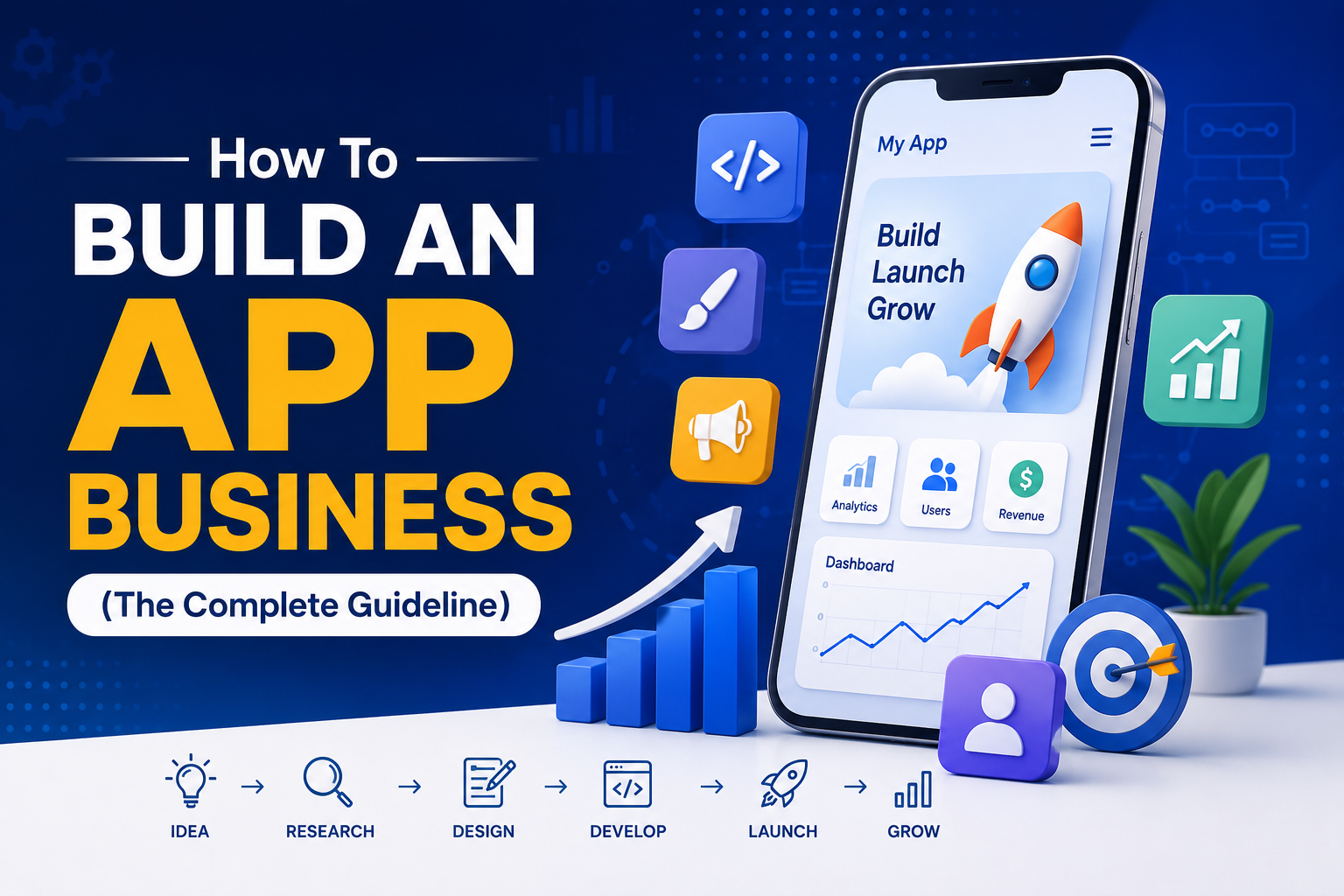
How To Build An App Business (The Complete Guideline)
The mobile app industry has transformed the way businesses operate and how people interact with technology. From food delivery and ride-sharing to education, healthcare, entertainment, and finance, mobile applications have become an essential part of everyday life. Millions of users download apps daily, creating enormous opportunities for entrepreneurs, developers, startups, and businesses looking to generate recurring revenue.
Building an app, however, is only one part of the journey. Many people mistakenly believe that publishing an app on the App Store or Google Play Store automatically leads to success. In reality, a successful app business requires careful planning, market research, strategic development, effective marketing, customer retention, and continuous improvement.
Whether you’re a beginner with no coding experience, an entrepreneur with a business idea, or a company planning to launch a digital product, this comprehensive guide will walk you through every stage of building a profitable app business.
Table of Contents
- What Is an App Business?
- Why Start an App Business?
- Different Types of Mobile Apps
- Finding a Profitable App Idea
- Market Research
- Validate Your Idea Before Development
- Create Your Business Plan
- Choose the Right Business Model
- Design an Outstanding User Experience
- Build Your MVP
- Choose Your Development Method
- Testing and Quality Assurance
- Launch Your App
- App Marketing Strategies
- Monetization Methods
- Customer Retention
- Scaling Your App Business
- Common Mistakes
- Frequently Asked Questions
- Final Thoughts
What Is an App Business?
An app business is a company or entrepreneurial venture that creates, publishes, and monetizes mobile applications. Unlike traditional businesses, app businesses primarily deliver products or services through smartphones, tablets, or other smart devices.
The revenue can come from several sources, including:
- App purchases
- Subscriptions
- Advertisements
- In-app purchases
- Affiliate marketing
- Premium memberships
- Enterprise licensing
Some of the world’s biggest companies—including Uber, Spotify, Airbnb, WhatsApp, and TikTok—started with a simple app idea before growing into billion-dollar businesses.
The beauty of an app business is that it can reach users globally without requiring physical stores or inventory.
Why Should You Start an App Business?
There are numerous reasons why launching an app business is an attractive opportunity.
Growing Smartphone Usage
More than seven billion smartphone subscriptions exist worldwide, and mobile usage continues to increase every year. Consumers now prefer mobile apps over websites for convenience and speed.
Recurring Revenue
Subscription-based apps can generate predictable monthly income.
Examples include:
- Fitness apps
- Meditation apps
- Video streaming
- Language learning
- Productivity software
Instead of selling once, you earn revenue every month.
Global Reach
Unlike local businesses, apps can be downloaded by users from almost any country.
A single successful application can serve thousands—or even millions—of users simultaneously.
Low Operational Costs
Compared to opening physical stores, app businesses require significantly lower overhead.
After development, most expenses relate to:
- Hosting
- Customer support
- Marketing
- Updates
- Analytics
High Scalability
Traditional businesses often require hiring more employees as they grow.
Apps can scale much more efficiently because software serves many users without proportional increases in operating costs.
Different Types of Mobile Apps
Before building an app, understand the different categories available.
Lifestyle Apps
Examples include:
- Fitness
- Yoga
- Diet tracking
- Meditation
- Habit tracking
These often perform well with subscription models.
E-commerce Apps
Allow users to:
- Browse products
- Place orders
- Track deliveries
- Make secure payments
Examples include Amazon, eBay, and Shopify-powered stores.
Educational Apps
Growing demand has made educational applications one of the fastest-growing markets.
Examples:
- Language learning
- Online courses
- Children’s education
- Exam preparation
- Skill development
Finance Apps
These include:
- Banking
- Expense tracking
- Investing
- Budget management
- Cryptocurrency wallets
Trust and security are particularly important in this category.
Entertainment Apps
These provide:
- Movies
- Music
- Gaming
- Podcasts
- Live streaming
Many use subscriptions and advertisements for monetization.
Social Networking Apps
Examples:
- Community platforms
- Messaging
- Photo sharing
- Professional networking
Their success depends heavily on user engagement and network effects.
How to Find a Profitable App Idea
Every successful app starts with solving a problem.
Don’t begin by asking:
“What app should I build?”
Instead ask:
“What problem can I solve better than existing solutions?”
Great app ideas typically emerge from everyday frustrations.
For example:
- Difficulty managing personal finances
- Organizing team projects
- Learning new skills
- Tracking fitness progress
- Booking appointments
- Managing inventory
- Finding local services
Look for Pain Points
Pay attention to:
- Customer complaints
- Online forums
- Reddit discussions
- Facebook groups
- Product reviews
- Google Play reviews
- App Store reviews
Users openly share what existing apps lack.
These gaps create business opportunities.
Study Existing Apps
Competition is actually a positive sign.
It proves there is demand.
Instead of copying competitors, improve upon them by offering:
- Better design
- Faster performance
- Lower pricing
- Additional features
- Better customer support
Follow Industry Trends
Emerging technologies continue creating new opportunities.
Current trends include:
- Artificial Intelligence
- Health technology
- Remote work
- Personal productivity
- Creator economy
- Cybersecurity
- Fintech
- Sustainability
Conduct Thorough Market Research
Skipping market research is one of the biggest reasons apps fail.
Before writing a single line of code, understand your market.
Identify Your Target Audience
Define your ideal users.
Consider:
- Age
- Gender
- Location
- Income
- Education
- Profession
- Interests
- Device preferences
For example:
A meditation app for busy professionals differs significantly from one designed for teenagers.
Analyze Competitors
Study:
- Features
- Pricing
- Reviews
- Downloads
- Ratings
- User interface
- Strengths
- Weaknesses
Create a comparison spreadsheet.
This helps identify opportunities.
Keyword Research
Understand what users search for.
Use tools like:
- Google Keyword Planner
- Ahrefs
- SEMrush
- Ubersuggest
Focus on keywords with:
- Good search volume
- Reasonable competition
- Commercial intent
These insights help shape both your app and your future marketing strategy.
Validate Your App Idea Before Building
One of the most expensive mistakes entrepreneurs make is investing thousands of dollars into an app that nobody wants.
Validation helps reduce this risk.
Create a Landing Page
Develop a simple website explaining:
- Your app
- Its benefits
- Key features
- Expected launch date
Include an email signup form.
If people willingly join your waiting list, it’s a positive signal that there’s genuine interest.
Build a Prototype
You don’t need a fully functional application at this stage.
Instead, create:
- Mockups
- Interactive wireframes
- Clickable prototypes
Tools such as Figma and Adobe XD make this process straightforward.
Show the prototype to potential users and gather honest feedback.
Interview Potential Customers
Speak directly with your target audience.
Ask questions like:
- What problem are you trying to solve?
- What solutions do you currently use?
- What do you dislike about those solutions?
- Would you pay for a better alternative?
- Which features matter most?
Avoid leading questions that encourage people to tell you what you want to hear.
Test Pricing Early
Don’t wait until launch to determine pricing.
Experiment with different pricing options during validation.
For example:
- Monthly subscription
- Annual subscription
- One-time purchase
- Freemium model
Understanding what customers are willing to pay helps shape a sustainable business model.
Create a Business Plan
A business plan doesn’t have to be a 100-page document, but it should clearly answer several key questions.
What problem does your app solve?
Your value proposition should be concise and compelling.
Who are your customers?
Define your primary audience and any secondary markets.
How will you make money?
Identify your revenue streams.
Who are your competitors?
List direct and indirect competitors, along with your competitive advantages.
What are your startup costs?
Include estimates for:
- App development
- UI/UX design
- Hosting
- Marketing
- Customer support
- Legal requirements
- App store fees
- Software subscriptions
What are your growth goals?
Set measurable targets, such as:
- Number of downloads
- Monthly active users
- Monthly recurring revenue
- Customer retention rate
- Conversion rate
A clear business plan acts as a roadmap and makes it easier to attract investors or partners if you decide to seek funding later.
Choose the Right App Business Model
Building a successful app business isn’t only about developing a great application. You also need a sustainable business model that generates consistent revenue while delivering value to users.
The right model depends on your target audience, industry, and the type of problem your app solves.
Freemium Model
The freemium model is one of the most popular strategies used by successful apps. Users can download and use the app for free, but advanced features require payment.
This approach helps attract a large user base because there is no barrier to entry. Once users experience the value of the app, many choose to upgrade.
Examples include productivity tools, note-taking apps, and language learning platforms.
Advantages
- Easy to attract users
- Builds trust
- Higher download rates
- Opportunity to upsell premium features
Challenges
- Requires a large number of users
- Free users still generate operating costs
- Conversion rates may be relatively low
Subscription Model
Subscriptions generate recurring monthly or yearly revenue, making this one of the most stable business models.
Users pay regularly in exchange for continued access to premium content or services.
Popular categories include:
- Fitness
- Meditation
- Education
- Productivity
- Business software
- AI tools
In-App Purchases
Instead of charging for the entire application, users purchase additional content.
Examples include:
- Virtual currency
- Extra game levels
- Premium templates
- Additional storage
- Exclusive content
Advertising
Advertising works best for applications with large numbers of active users.
Common ad formats include:
- Banner ads
- Rewarded videos
- Native advertisements
- Interstitial ads
Be careful not to overload your app with advertisements, as this can negatively impact the user experience.
One-Time Purchase
Users pay once to download the application.
While this model provides immediate revenue, it doesn’t generate recurring income, making long-term growth more challenging unless you release updates or additional products.
Design an Outstanding User Experience (UX)
Even the best idea can fail if users find the app confusing or frustrating.
Excellent design focuses on simplicity, clarity, and usability.
Keep Navigation Simple
Users should be able to complete important tasks with as few steps as possible.
Avoid unnecessary screens, excessive menus, and complicated workflows.
Maintain Consistent Design
Use consistent:
- Colors
- Typography
- Buttons
- Icons
- Layouts
Consistency builds trust and reduces the learning curve.
Prioritize Speed
Slow-loading apps lose users quickly.
Optimize:
- Images
- API requests
- Database queries
- Animations
Performance is a competitive advantage.
Accessibility Matters
Design for everyone.
Consider:
- Larger font sizes
- High color contrast
- Screen reader compatibility
- Clear navigation
- Touch-friendly buttons
Accessibility improves usability for all users.
Build a Minimum Viable Product (MVP)
One of the biggest mistakes entrepreneurs make is trying to build every possible feature before launching.
Instead, focus on creating a Minimum Viable Product (MVP).
An MVP includes only the essential features needed to solve the core problem.
For example, if you’re building a task management app, the MVP might include:
- User registration
- Create tasks
- Edit tasks
- Delete tasks
- Notifications
Features such as AI suggestions, integrations, and advanced analytics can be added later.
Launching an MVP allows you to:
- Gather real feedback
- Validate demand
- Reduce development costs
- Reach the market faster
Choose Your Development Approach
There are several ways to build an app.
Native Development
Native apps are built specifically for Android or iOS.
Advantages include:
- Excellent performance
- Better security
- Full access to device features
Disadvantages:
- Higher development costs
- Separate codebases for different platforms
Cross-Platform Development
Frameworks such as Flutter and React Native allow developers to build apps for multiple platforms from a single codebase.
Benefits include:
- Lower costs
- Faster development
- Easier maintenance
Many startups choose this option to launch quickly.
No-Code and Low-Code Platforms
If you don’t have programming skills, no-code tools can help you create simple applications.
These platforms are ideal for:
- MVPs
- Internal business apps
- Small startups
- Validation projects
However, they may have limitations as your app grows.
Test Your App Thoroughly
Testing should never be treated as an afterthought.
Comprehensive testing helps identify bugs, improve performance, and create a better user experience.
Areas to test include:
- Functionality
- Performance
- Security
- Device compatibility
- User interface
- Payment systems
- Notifications
- Offline functionality
Invite beta users to test your app before the public launch.
Their feedback can reveal issues your development team may have overlooked.
Launch Your App Successfully
Publishing your app is an exciting milestone, but it shouldn’t happen without preparation.
Prepare Your Store Listing
Create:
- A compelling app title
- Clear description
- High-quality screenshots
- Promotional video
- Attractive icon
Your store listing serves as your app’s first impression.
Optimize for App Store Search (ASO)
App Store Optimization (ASO) is similar to SEO for websites.
Focus on:
- Relevant keywords
- Engaging descriptions
- Positive reviews
- Strong ratings
- Regular updates
Better ASO can significantly increase organic downloads.
Build Anticipation Before Launch
Generate excitement by:
- Creating a landing page
- Growing an email list
- Posting on social media
- Publishing blog content
- Reaching out to influencers
- Joining online communities
A strong launch often begins weeks or months before the app becomes available.
Market Your App
Marketing is essential. Even the best app won’t succeed if people don’t know it exists.
Content Marketing
Publish helpful content related to your niche.
For example:
- Tutorials
- Industry insights
- Case studies
- Success stories
- How-to guides
Content marketing builds authority and attracts organic traffic.
Search Engine Optimization (SEO)
If your app has a website, optimize it for search engines.
Target relevant keywords, create high-quality content, and improve page speed to attract users searching for solutions online.
Social Media Marketing
Maintain an active presence on platforms where your audience spends time.
Share:
- Product updates
- Educational tips
- Behind-the-scenes content
- Customer testimonials
- Short videos
Consistency is more important than posting frequently for a short period.
Email Marketing
Build an email list from day one.
Email can be used to:
- Announce new features
- Share tutorials
- Send newsletters
- Re-engage inactive users
- Offer promotions
Email remains one of the highest-converting marketing channels.
Influencer Marketing
Partner with creators who have established trust with your target audience.
Authentic reviews often outperform traditional advertisements.
Monetize Your App Effectively
Revenue should align with the value your app provides.
Possible monetization methods include:
- Monthly subscriptions
- Annual subscriptions
- In-app purchases
- Premium upgrades
- Advertising
- Affiliate partnerships
- Sponsorships
- Enterprise licensing
Avoid introducing too many monetization methods at once. A clear, user-friendly pricing strategy generally performs better.
Focus on Customer Retention
Acquiring users is expensive. Keeping existing users is often more profitable.
Strategies to improve retention include:
- Regular updates
- Bug fixes
- Excellent customer support
- Personalized recommendations
- Loyalty programs
- Push notifications (used responsibly)
- New features based on user feedback
Listen to your community and continually improve your product.
Scale Your App Business
Once your app gains traction, it’s time to think about growth.
Expand Features
Introduce new capabilities based on user demand rather than assumptions.
Enter New Markets
Translate your app into multiple languages and adapt it for different regions.
Localization can significantly increase downloads and engagement.
Build Partnerships
Collaborate with businesses that serve similar audiences.
Strategic partnerships can help you reach new users more efficiently.
Use Analytics
Track key performance indicators (KPIs) such as:
- Daily Active Users (DAU)
- Monthly Active Users (MAU)
- Customer Acquisition Cost (CAC)
- Lifetime Value (LTV)
- Retention Rate
- Churn Rate
- Conversion Rate
- Average Revenue Per User (ARPU)
Data-driven decisions are more reliable than assumptions.
Common Mistakes to Avoid
Many promising apps fail because of avoidable errors.
Common mistakes include:
- Building without validating the idea
- Ignoring user feedback
- Trying to include too many features initially
- Poor user experience
- Weak marketing
- Inadequate testing
- Choosing the wrong monetization strategy
- Neglecting app updates
- Overlooking security and privacy
- Failing to analyze user behavior
Learning from these mistakes can save significant time and resources.
Ready to Turn Your App Idea into a Profitable Business?
Launching a successful app is only the beginning. To build a scalable and profitable app business, you need the right strategy, powerful branding, high-converting content, a professional website, effective SEO, and data-driven digital marketing that attracts and retains customers.
At MahbubOsmane.com, we help startups, entrepreneurs, SMEs, and enterprise businesses transform innovative ideas into successful digital brands. Whether you’re planning to launch your first mobile app or scale an existing app business, our experienced team delivers customized digital solutions that drive measurable growth.
Our professional services include:
- ✅ Search Engine Optimization (SEO)
- ✅ Google Ads & AdOps Management
- ✅ Content Writing & SEO Copywriting
- ✅ Website Design & Development
- ✅ Graphic Design & Brand Identity
- ✅ Professional Video Editing
- ✅ Digital Marketing Strategy
- ✅ Technical SEO & Website Audits
- ✅ Conversion Rate Optimization (CRO)
Why Businesses Choose MahbubOsmane.com
We don’t just offer digital marketing services—we build long-term growth strategies backed by proven results.
Our credibility speaks for itself:
- ⭐ 700+ successfully completed freelance projects
- ⭐ 5-Star client feedback on Upwork
- ⭐ Available on Hubstaff Talent
- ⭐ Serving clients across Saudi Arabia, UAE, Qatar, Kuwait, USA, UK, Canada, Germany, Lithuania, Bangladesh, and worldwide
- ⭐ Transparent communication, timely delivery, and results-driven solutions
Whether you need to increase app downloads, improve search engine rankings, generate qualified leads, enhance your brand identity, or grow your online revenue, we’re ready to help.
Let’s Build Your Next Success Story
If you’re looking for a reliable digital marketing partner with a proven international track record, we’d love to discuss your project.
Contact Us Today
📞 Saudi Arabia (Call & WhatsApp)
+966 54 948 5900
+966 55 322 7950
📞 Bangladesh (Call & WhatsApp)
+880 1716 988953
📧 Email
hi@mahbubosmane.com
mahbubosmane@gmail.com
🌐 Website
www.MahbubOsmane.com
Frequently Asked Questions (FAQs) About Building an App Business
Internal Resources
- Meet Mahbub Osmane
https://mahbubosmane.com/mahbub-osmane/ - Best SEO Expert in Bangladesh
https://mahbubosmane.com/best-seo-expert-in-bangladesh/ - Build a Profit Engine for Your Business
https://mahbubosmane.com/profit-engine/ - Top Authentic Backlink Sources for Your Website
https://mahbubosmane.com/backlink-source/ - Our Digital Marketing Services
https://mahbubosmane.com/services/
About the Author
Mahbub Osmane is a digital marketing expert who helps businesses build effective online strategies, including selecting and managing the right social media channels for growth. With hands-on experience across platforms and markets, Mahbub shares practical, actionable insights to help businesses connect with their audience and grow their brand presence.
Contact information Email: hi@mahbubosmane.com Website: https://mahbubosmane.com/ Mobile: +966 54 948 5900 (KSA) / +880 1716 988953 (BD) Address: 2282 7284 Al Malawi Southern 1, As Sulimaniyah Dist, Makkah 24236, Saudi Arabia